Investing is one of the most reliable ways to build long-term wealth, outpace inflation, and achieve financial independence. However, jumping into financial markets without a clear understanding of the instruments available is a common recipe for costly mistakes. Every investment vehicle belongs to a broader category known as an asset class.
An asset class is a grouping of investments that exhibit similar financial characteristics, behave similarly in the marketplace, and are subject to the same laws and regulations. Recognizing how these distinct categories function, how they react to economic cycles, and how they interact with one another is the cornerstone of sound portfolio construction. By gaining a comprehensive grasp of the primary and alternative asset classes, investors can build resilient, balanced portfolios aligned with their personal risk tolerance, time horizon, and long-term financial goals.
Equities: The Engine of Portfolio Growth
Equities, commonly referred to as stocks or shares, represent fractional ownership in a publicly traded or private corporation. When you purchase equity, you become a shareholder, entitling you to a portion of the company’s earnings and underlying assets.
-
Capital Appreciation: The primary objective of investing in equities is price appreciation. As a company expands operations, grows revenues, and increases profitability, the value of its stock generally rises, allowing investors to sell their shares at a higher price than the purchase price.
-
Dividend Income: Many mature, established corporations distribute a portion of their profits back to shareholders in the form of regular dividends, providing a steady stream of passive cash flow alongside potential price growth.
-
Volatility and Risk Profile: Equities carry higher market risk compared to fixed-income assets. Stock prices fluctuate daily based on corporate earnings reports, macroeconomic indicators, industry disruption, and broader market sentiment. Over long horizons, equities have historically outpaced inflation and delivered higher returns than cash or bonds, but they require investors to endure short-term market swings.
-
Sub-Categories of Equities: Equities are categorized across multiple dimensions, including company size (large-cap, mid-cap, and small-cap), geographic exposure (domestic, developed international, and emerging markets), and investment style (growth stocks, which prioritize rapid expansion, versus value stocks, which trade at discounts relative to their fundamental worth).
Fixed Income: Capital Preservation and Predictable Cash Flow
Fixed-income securities, universally known as bonds or debt instruments, represent loans made by an investor to a borrower. The borrower is typically a government entity, municipality, or corporation that uses the borrowed capital to fund operations, infrastructure, or strategic initiatives.
-
Predictable Coupon Payments: In exchange for lending capital, the issuer agrees to pay the investor a predetermined interest rate, known as the coupon, on a regular schedule (typically semi-annually or annually) until the bond reaches its stated maturity date.
-
Return of Principal: When a bond matures, the issuer is legally obligated to return the original face value, or par value, of the bond to the debt holder, provided the issuer remains solvent.
-
The Role of Credit Quality: Fixed-income assets vary widely in risk based on the creditworthiness of the borrower. US Treasury obligations are backed by the full faith and credit of the federal government and are viewed as virtually free of default risk. Conversely, corporate bonds carry varying degrees of risk, ranging from highly rated investment-grade bonds to high-yield or junk bonds issued by companies with lower credit ratings.
-
Interest Rate Sensitivity: Bond prices move inversely to prevailing interest rates. When benchmark rates climb, existing bonds with lower coupon rates decline in market value. When interest rates fall, existing higher-paying bonds become more valuable. Fixed-income assets help dampen overall portfolio volatility, providing stability when stock markets experience turbulence.
Cash and Cash Equivalents: Liquidity and Capital Safety
Cash and cash equivalents comprise the most liquid and secure financial instruments available. These assets are characterized by extremely short maturities, minimal price fluctuations, and rapid accessibility.
-
Core Cash Instruments: This category includes traditional bank checking and savings accounts, high-yield savings accounts, money market funds, certificates of deposit (CDs), and short-term Treasury bills with maturities of three months or less.
-
Principal Preservation: The principal value of cash equivalents is generally insulated from market declines, making them an essential repository for emergency savings, near-term financial obligations, and temporary liquidity while waiting for investment opportunities.
-
Inflation Drag: While cash provides absolute liquidity and stability, it carries significant purchasing power risk. Over extended periods, the after-tax yield on cash equivalents often fails to keep pace with the rate of inflation, leading to a silent erosion of real wealth if excessive capital is left idle.
Real Estate: Tangible Assets and Inflation Hedging
Real estate represents investment in physical land, residential properties, commercial developments, or indirect ownership through structured financial vehicles.
-
Direct Property Ownership: Purchasing physical properties, such as single-family rental homes, multi-family apartment buildings, or commercial storefronts, provides monthly rental income and potential long-term property appreciation. However, direct ownership requires hands-on management, property maintenance, tenant oversight, and substantial upfront capital, along with illiquidity.
-
Real Estate Investment Trusts (REITs): For investors seeking exposure to real estate without property management responsibilities, REITs offer publicly traded shares in companies that own, operate, or finance income-generating real estate. REITs are legally required to distribute at least ninety percent of their taxable income to shareholders as dividends, offering high income yields and liquid market access.
-
Inflation Protection: Real estate often serves as a dependable hedge against rising prices. During inflationary periods, property values typically appreciate, and landlords can adjust rental rates upward to reflect prevailing living costs.
Commodities: Raw Materials and Economic Inputs
Commodities are standardized raw materials and basic agricultural goods traded on global exchanges. They are broadly divided into hard commodities and soft commodities.
-
Hard Commodities: These include mined natural resources such as precious metals (gold, silver, and platinum), industrial metals (copper, aluminum, and zinc), and energy products (crude oil, natural gas, and refined fuels).
-
Soft Commodities: These encompass agricultural products and livestock, including wheat, corn, coffee, soybeans, and cattle.
-
Market Dynamics and Volatility: Commodities are primarily driven by real-time supply and demand imbalances, geopolitical events, weather disruptions, and currency valuations. Gold, in particular, is widely utilized as a store of value during times of currency devaluation, banking instability, or severe geopolitical tension.
-
Investment Methods: Investors generally access commodities through commodity-focused exchange-traded funds (ETFs), futures and options contracts, or by buying shares in natural resource extraction and agricultural processing companies.
Alternative Investments: Expanding Diversification
Alternative asset classes encompass non-traditional investment vehicles that operate outside standard public stock and bond markets. Historically reserved for institutional funds and accredited high-net-worth individuals, alternatives have become increasingly accessible to individual retail investors.
-
Private Equity and Venture Capital: These funds invest directly in private enterprises that are not listed on public stock exchanges. Venture capital focuses on early-stage startups with high growth potential, while private equity typically targets established companies to streamline operations and sell them for a profit.
-
Hedge Funds: Actively managed investment pools that employ complex strategies, including long and short positioning, leverage, and arbitrage, aiming to generate positive returns regardless of whether the broader market rises or falls.
-
Digital Assets and Collectibles: This category includes cryptocurrencies, blockchain-based assets, fine art, rare vintage automobiles, and fine wines. While these assets can experience rapid price surges, they carry substantial volatility, speculative risks, regulatory uncertainties, and illiquid secondary markets.
Asset Allocation, Correlation, and Risk Profiles
No single asset class consistently outperforms all others across every economic environment. Equities tend to thrive during periods of robust economic expansion, bonds provide reliable income during downturns, commodities often gain during supply-driven inflation, and cash offers safety during acute liquidity crunches.
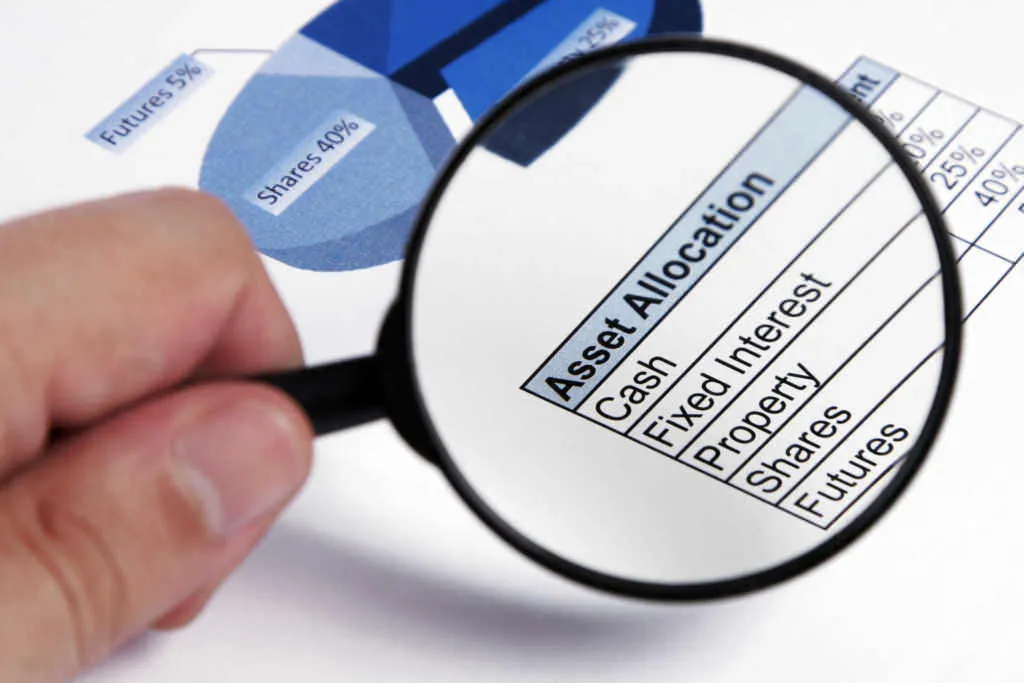
The strategic distribution of capital across multiple asset classes is known as asset allocation. The primary objective is to combine assets that have low or negative correlation with one another, meaning their market values do not move in lockstep.
By diversifying across uncorrelated asset classes, an investor can reduce total portfolio risk without sacrificing long-term return potential. A younger investor with a thirty-year time horizon may allocate predominantly toward growth-oriented equities, while an investor approaching retirement might prioritize fixed income and cash equivalents to preserve accumulated wealth and generate dependable income.
Frequently Asked Questions
How does an investor determine the right asset allocation mix for their personal situation?
Asset allocation is primarily determined by evaluating three factors: your investment time horizon, risk tolerance, and specific financial goals. An investor with several decades before retirement has the time to recover from equity market downturns and can sustain a growth-heavy allocation. Conversely, someone needing their capital within three to five years should prioritize capital preservation vehicles such as fixed-income securities, CDs, and cash equivalents to avoid selling depressed assets during a market drop.
What is the difference between direct investing and pooled investing within an asset class?
Direct investing involves buying the individual asset directly, such as purchasing single shares of an individual company’s stock, buying a specific corporate bond, or acquiring a physical rental home. Pooled investing involves buying into a collective vehicle, such as a mutual fund or exchange-traded fund (ETF), where funds from thousands of investors are combined to purchase a broad basket of underlying assets, providing instant diversification at a lower cost.
How often should a multi-asset portfolio be rebalanced?
Most financial professionals recommend reviewing and rebalancing a portfolio on a set schedule, such as semi-annually or annually, or when asset proportions drift beyond a specific threshold (for example, five percent away from target allocations). Over time, outperforming assets grow to represent a larger share of your total portfolio, inadvertently increasing your risk profile. Rebalancing forces you to systematically trim outperforming areas and allocate funds into underweighted assets.
Do all bonds guarantee safety of the original investment?
No, bonds do not carry universal guarantees. While US government obligations possess virtually zero default risk, corporate and municipal bonds carry credit risk based on the financial stability of the issuer. If a borrowing corporation declares bankruptcy, bondholders may lose a portion or all of their principal investment. Additionally, if an investor sells a bond prior to maturity during a period of rising interest rates, the bond may sell at a loss on the secondary market.
Why are alternative assets generally considered unsuitable for beginner investors?
Alternative investments often feature high minimum investment requirements, steep management fee structures, limited liquidity (often locking capital away for multiple years), complex tax reporting requirements, and a lack of public pricing transparency. Beginners are usually better served building a low-cost foundation using traditional equities, fixed income, and cash instruments before venturing into complex alternative strategies.
What causes traditional asset classes to become temporarily correlated during market crashes?
During severe systemic financial crises or liquidity panics, institutional investors and margin-leveraged traders are often forced to sell assets across the board to raise cash, meet margin calls, and satisfy client redemptions. This widespread selling pressure can cause stocks, high-yield bonds, real estate, and commodities to drop simultaneously, temporarily eroding the standard benefits of diversification until normal market conditions resume.
Can an investor gain exposure to real estate and commodities through standard equity accounts?
Yes. Investors do not need physical access to real estate or direct futures accounts to invest in these categories. Publicly traded Real Estate Investment Trusts (REITs) and commodity-tracking Exchange-Traded Funds (ETFs) trade on major stock exchanges just like standard company shares, allowing investors to buy and sell them within conventional brokerage and retirement accounts with standard liquidity.